Sierra Pacific Synod’s Holy Land Solidarity Pilgrimage - Day 5
A brief reflection from the Bishop
“Come and see,” says Jesus to the disciples of John the Baptist. A few verses later, Philip repeats the invitation to a skeptical Nathanael: “Can anything good come out of Nazareth?” Come and see.
We are well into our delegation to Palestine, journeying on the way of Jesus together. We are here in response to that same invitation, this time offered to us by our companions in the Evangelical Lutheran Church in Jordan and the Holy Land. Come and see the way of Jesus lived and claimed as hope and identity within the brutal reality of occupation.
Occupation is a devastating daily reality for Palestinians living in the West Bank. Watchtowers and walls. Arbitrarily closed roads and automatic gates. Tracking apps. Expanding illegal settlements. Daily, humiliating encounters at checkpoints with soldiers carrying automatic weapons, many scarcely older than our own teenagers, trained to see threat before they see humanity.
M. Gessen’s recent New York Times essay, “State Terror Has Arrived,” written in response to the federal incursion into Minneapolis, describes dynamics known here all too well: the deliberate cultivation of fear, fear of arbitrary violence, fear of disappearance, fear that safety itself is provisional. Some may be spared in a given moment, but no one is meant to feel truly safe.
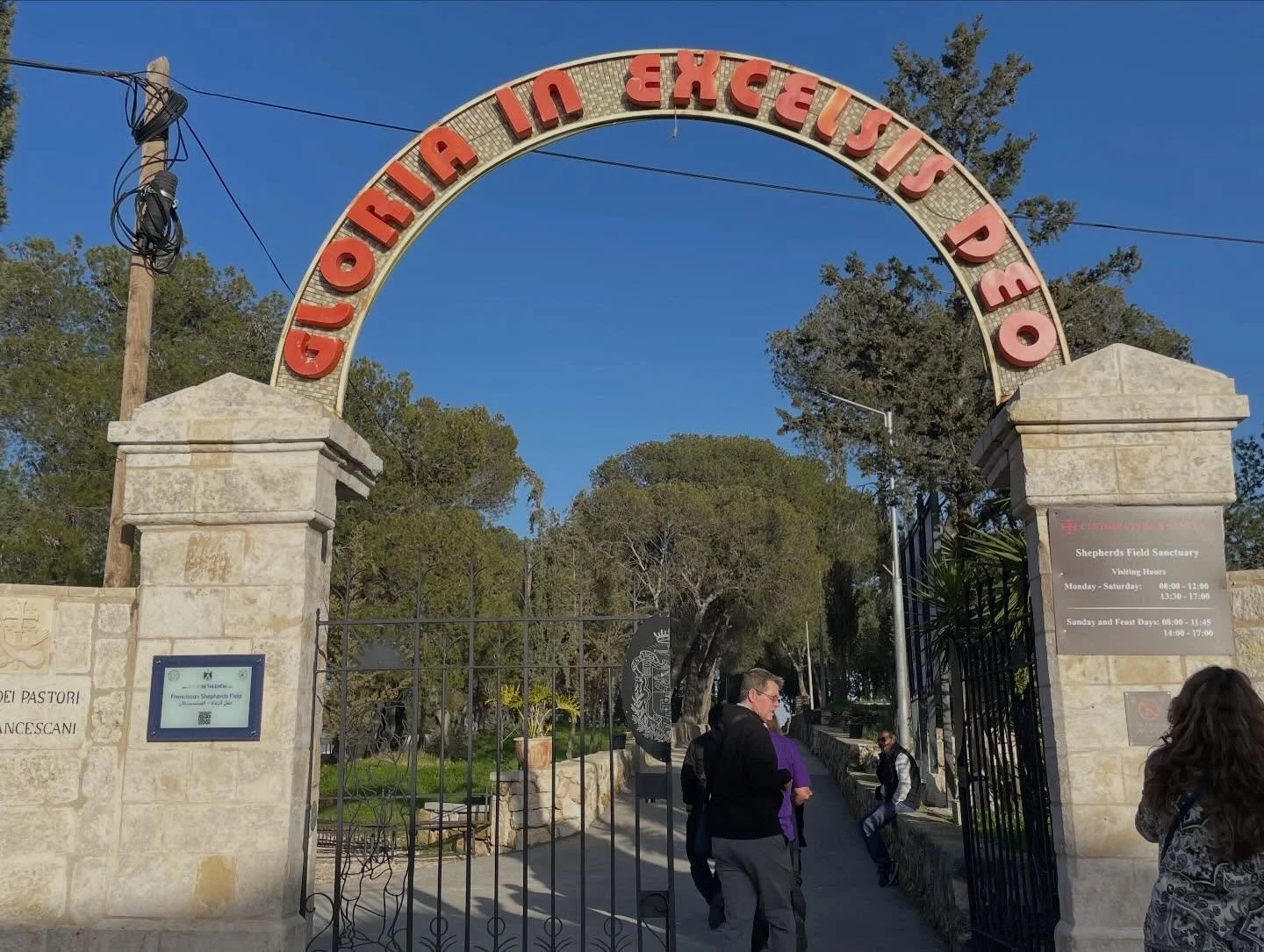
On Sunday, after worship at Bethlehem’s Christmas Lutheran Church, we visited nearby Beit Sahour and the Franciscan shrine marking the Shepherds’ Field, where tradition places the angelic announcement of Jesus’ birth: “Do not be afraid. I bring you glad tidings of great joy.” These are remembered as the fields of Boaz, named in the book of Ruth. Ruth, the immigrant. Ruth, the outsider. Ruth, the great grandmother of King David, and named again in the genealogy of Jesus. The good news is first spoken not in palaces, but to people marked by vulnerability, precarity, and fear, to people living under occupation.
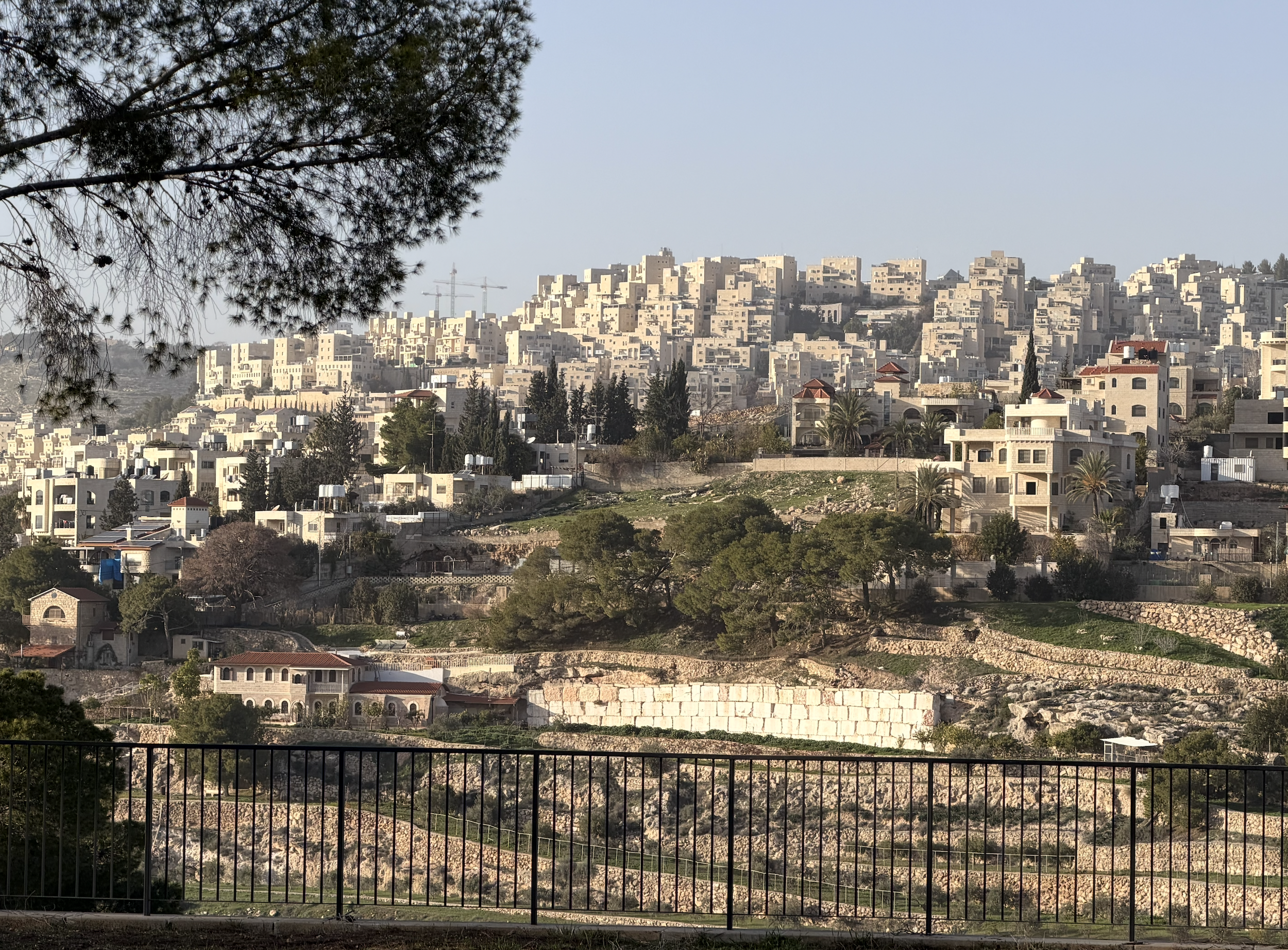
As you gaze across those fields, your eye is drawn upward to Har Homa, a large Israeli settlement rising on the opposite slope. The contrast is unavoidable: fields associated with angels, hope, and promise overshadowed by concrete, surveillance, and the barriers of an illegal residential community complete with schools, synagogues, stores, and the ordinary rhythms of family life. Har Homa dominates the landscape and, like settlements throughout the West Bank, reshapes land, movement, and daily life, carving up territory in ways that make a just political future impossible to imagine.
To come and see here requires close attention to the grave injustices encouraged under occupation. And it also requires attention to the depth of resilience that sustains the people.
Sumud — “steadfastness” — names the everyday acts of resilience, living, and hope in spite of occupation. Signs of sumud are visible everywhere. In the joy and curiosity of Christian and Muslim boys playing together at recess. In the generous hospitality that turns strangers into friends. In the brilliant creativity of artists whose photography, painting, and graphic design fill galleries at the Lutheran university. In the love, passion, and sincerity of a mixed-faith girls’ choir at a Lutheran elementary school. In the testimony of a young Muslim student who dreams of becoming an aerospace engineer, even though such a future is effectively foreclosed to Palestinian students. In the tenacious connection of a multigenerational family to their ancestral farm and orchards who, despite encroaching fanatical settlers on all sides, refuse to give in, to hate, to despair, or to flee. They refuse to be enemies.
Jesus’ invitation to come and see is an antidote to denial. The gospel requires our showing up as God shows up. Under occupation. In the midst of atrocity. The angels do not promise that there is nothing to fear. They proclaim, “Do not be afraid,” because God is already here. God enters histories marked by displacement and domination. God works through people the world overlooks. God keeps insisting on dignity, belonging, and life even when fear is being weaponized. God refuses to create enemies.
We come and see, not as spectators, but as people called to recognize injustice and to resist, to organize, and to bear witness. What we witness here in Palestine sharpens our vision for our resistance back home. And what we face at home strengthens our resolve to stand in solidarity with gospel partners living under occupation here and elsewhere.
Don’t give in, my friends. Don’t give up. Refuse to hate, to despair, or to become enemies. The One we follow was born in places like these. And his message continues to be the good news we believe in and that we can arrange our lives and our futures around.